
Knowledge Hub
Knowledge Hub
Focusing on diet and healthy eating is important for people living with NETs

Focusing on diet and healthy eating is important for people living with NETs, because eating well can:
Each person's NET diagnosis and experience can be different, therefore the nutritional recommendations vary. Some common nutrition related issues are:
Click on the tip sheets below for nutrition tips.
Dietary management can help to ease symptoms. Neuroendocrine Cancer New Zealand’s nutrition toolkit was developed to assist patients with NETs to self-manage symptoms, and when taking urinary tests at home.
The toolkit is intended to provide general nutrition tips. For more personalised nutrition advice please contact a dietitian.
Special thanks to Kelsey Paterson, Olivia Cochrane and the University of Otago for their research and this resulting toolkit.
Carcinoid syndrome may occur as a result of excessive hormone production by serotonin-producing NETs. Not everyone will develop carcinoid syndrome. This tip sheet provides a reminder of some of the key symptoms, trigger foods and good dietary sources of niacin.
If your bowel motions are hard, lumpy and difficult to pass, then you may be constipated. The constipation tip sheet may help you to prevent constipation.
Diarrhoea is usually associated with frequent, watery bowel motions. Diarrhoea in NETs can be caused by excessive hormone production, bowel surgery, somatostatin analogues (SSAs), chemotherapy and radiation therapy. The diarrhoea tip sheet provides information on managing symptoms and when to contact your doctor.
The eating well NET Tip Sheet is a simple guide with a range of tips on eating well for a healthy lifestyle.
Nausea and vomiting can be caused by chemotherapy, radiation therapy, somatostatin analogues, bowel obstruction and NETs themselves. The nausea and vomiting tip sheet has a range of practical tips to manage nausea and vomiting.
You may be required to take a take a urinary 5-hydroxyindole acetic acid (5-HIAA) test. Urinary 5-HIAA is used as a marker of serotonin production in neuroendocrine tumours. There are a number of foods that must be avoided before and during the 5-HIAA test.
Sometimes gaining weight can be a problem. The weight gain tip sheet has some ideas to help you manage your weight gain through small lifestyle changes.
Sometimes losing weight can be a problem. The weight loss tip sheet has some ideas to help you increase the energy and protein content of your diet to help you maintain your weight.
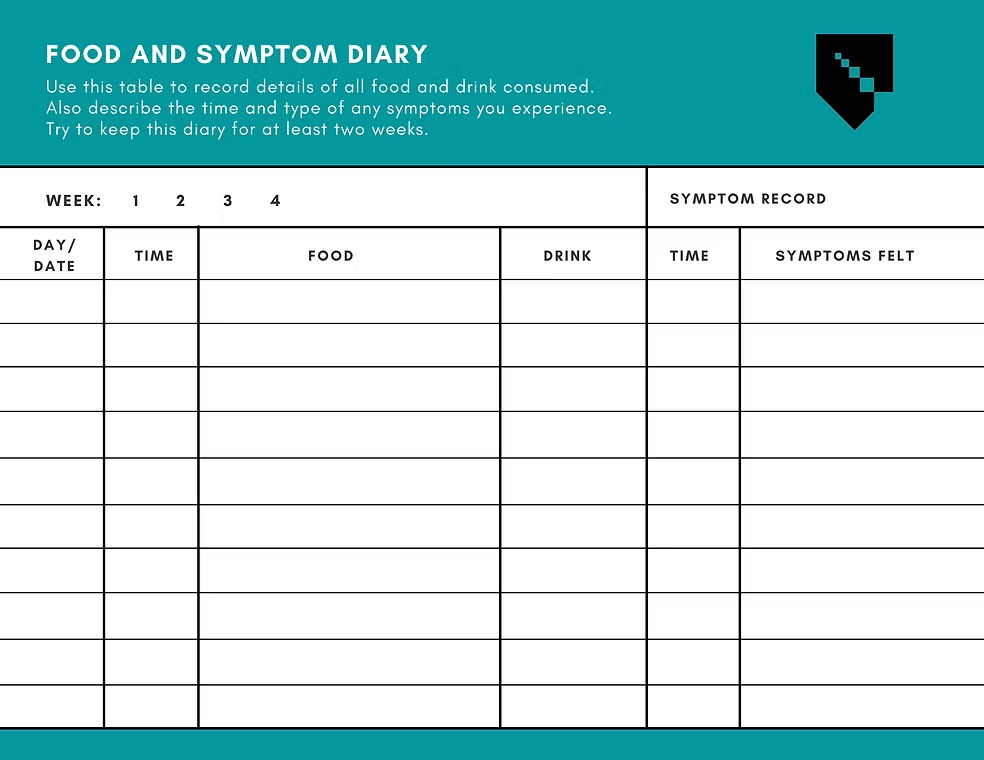
If you are experiencing any difficulties with your nutrition keep a food and symptom diary to identify foods that trigger symptoms. We have created a template for you to download and print to record your diet for easy reference. It is recommended that your diary is kept for at least 2 weeks. Seek advice from a healthcare professional with this information.

Carcinoid syndrome tip sheet
Practical nutrition tips for managing carcinoid syndrome – from the NECNZ Nutrition for NETs guide.

Constipation tip sheet
Nutrition strategies for managing constipation when living with neuroendocrine cancer.

Diarrhoea toolkit
Toolkit of practical food, fluid and lifestyle steps for managing diarrhoea with NETs.

Eating well tip sheet
General eating-well guidance for people living with neuroendocrine cancer.